Project Management
Project Structure
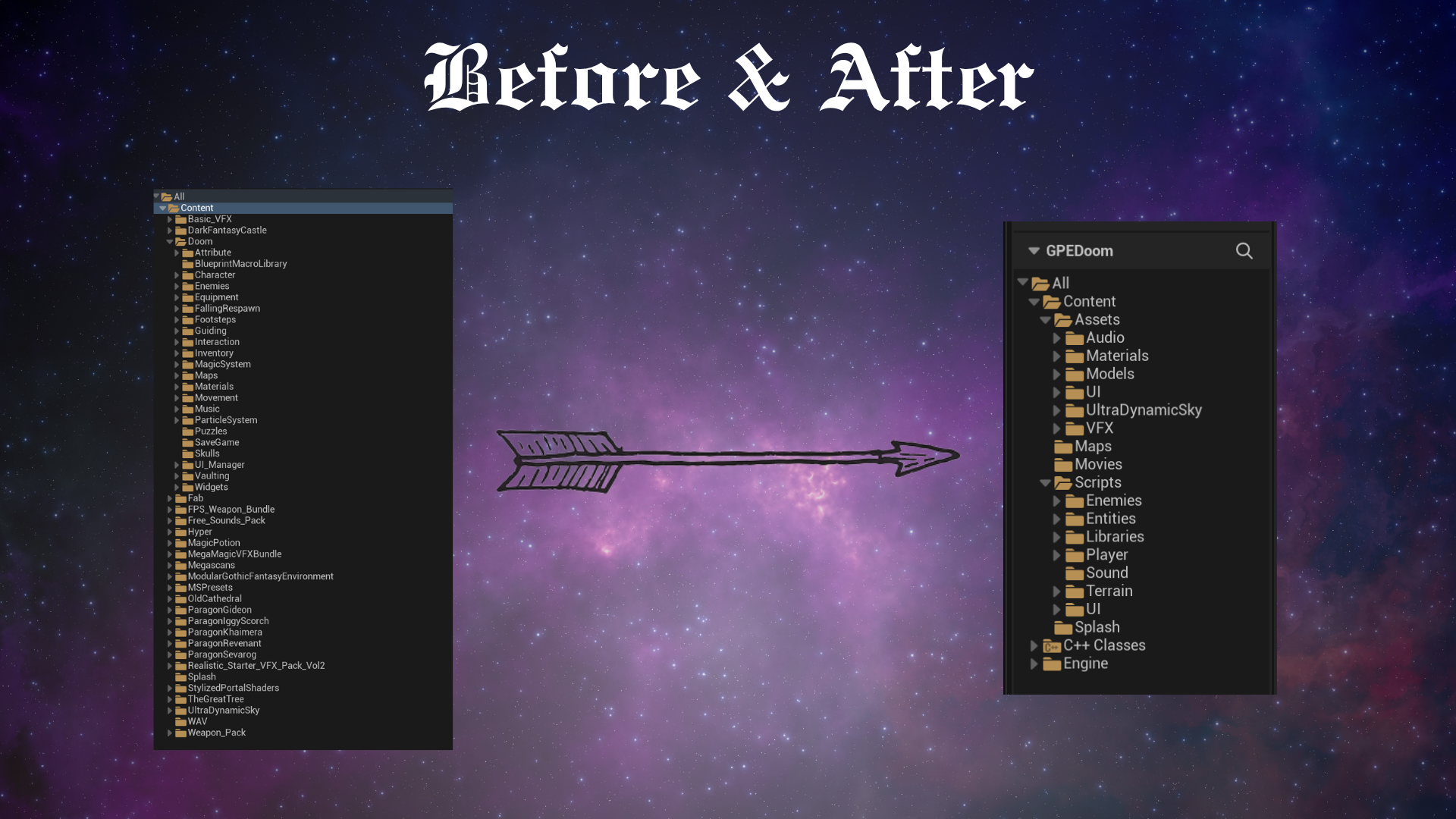
When we started the project, we immediately noticed that the existing project structure would be very difficult to maintain and scale.
- Complex and inconsistent folder structure.
- 28 GB project size.
- Unused blueprint references.
-
Large amounts of unused assets, including:
- Dozens of VFX.
- Hundreds of models.
- Thousands of materials.
The project had been developed by three previous student teams, who hadn't invested a lot of attention to maintaining the scalability of the project.
As project lead, I decided to spend the first two weeks of development reorganizing and cleaning the project, including my free time. I restructured the entire project structure, removed unnecessary assets and references and set collaboration rules for each other.
Issue Board
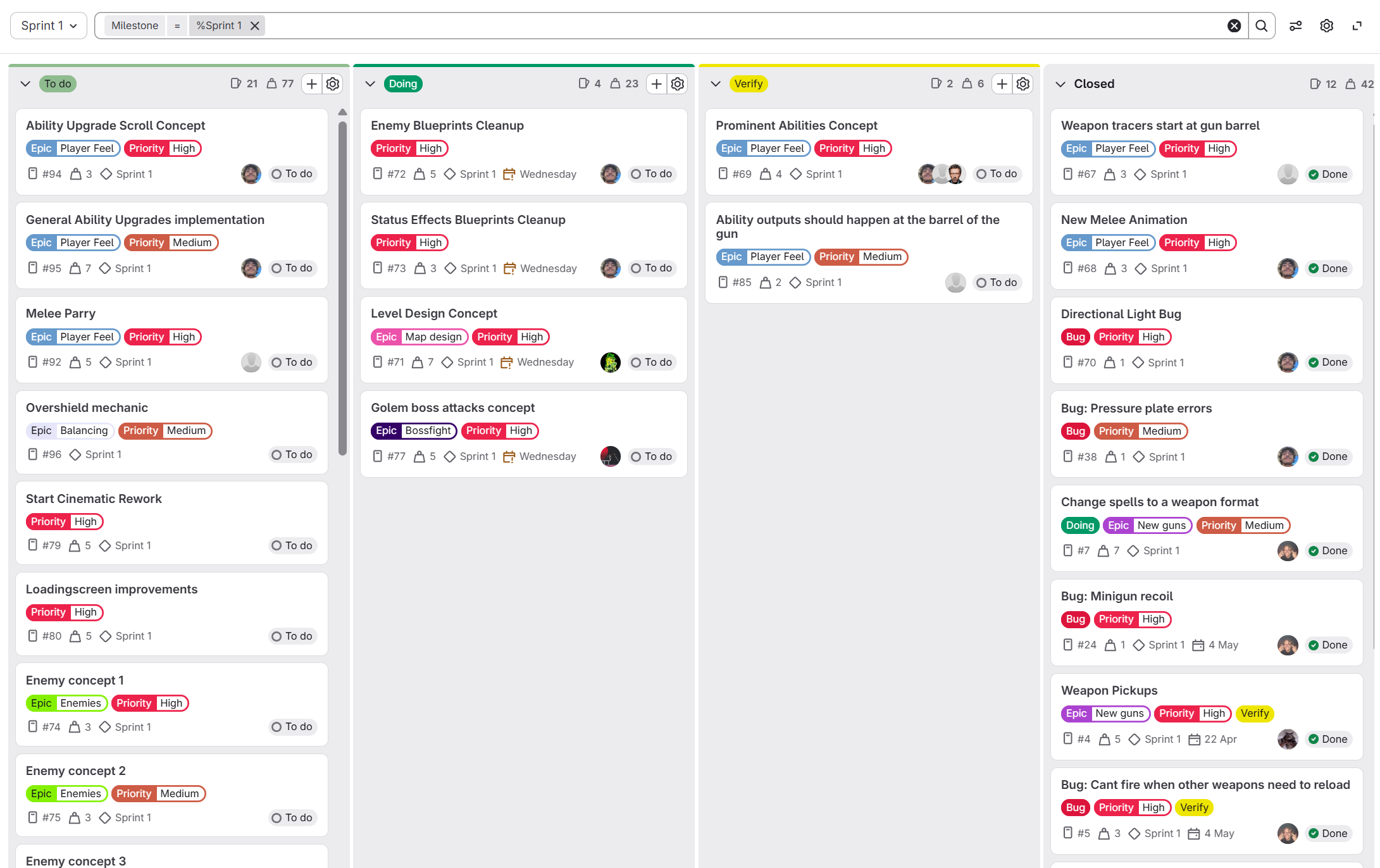
Alongside the technical work, I coordinated tasks and deadlines throughout the project. I broke large features into manageable smaller issues before distrubuting them across the team. I assigned these issues by not only gauging my teammates' current strengths, but also their motivations and their willingness to learn new skills, since we're still developing our professional experience.
I created acceptance criteria and a Definition of Done (DoD) for every issue, as well as clear prerequisites where necessary, so everyone knew what was required before starting and when a task was considered complete.
Product Owner Communication
I communicated our project goals, and important technical- & game design decisions to the Product Owner. I did this by planning meetings and by creating Canva presentations designed to grab his attention and excite him for what's to come.
The Product Owner had been considering ending the project, but told me that my enthusiasm and the direction I presented with were important factors in continuing it inside the university's new "Playful Tech" studio. He then asked me to present the project to the upcoming class (notice the introduction banner in the About page).